First aid tips
Recognise a stroke with BE-FAST
Recognise a stroke with BE-FAST: balance, eyes, face, arm, speech and terrible headache. Call 112 at once and note when the person was last seen normal.
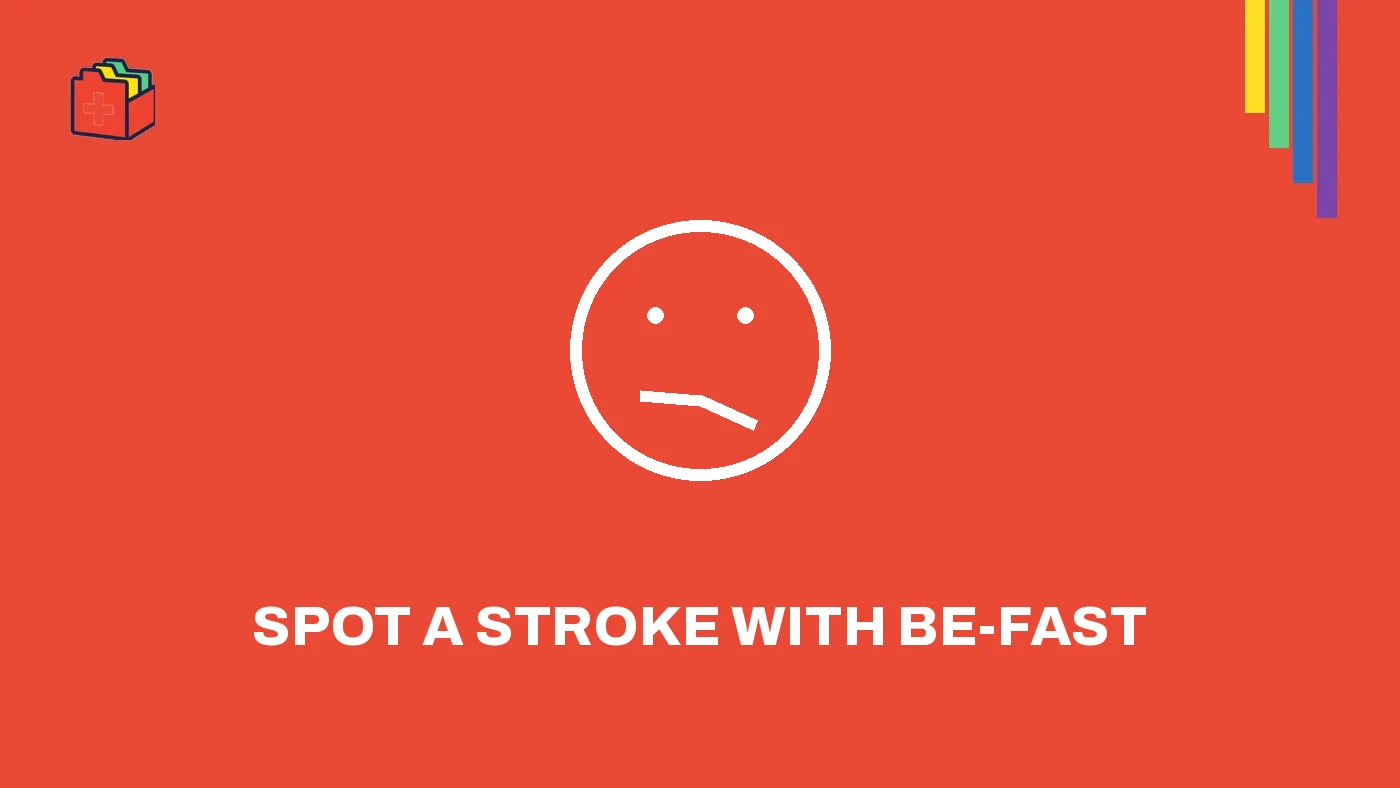
A colleague suddenly loses their balance, sees double or speaks unclearly. It could be a stroke, and every minute counts. Many people know the FAST test. New is BE-FAST: the extended version, which also helps you spot signs that FAST alone misses.
Why BE-FAST and not just FAST?
FAST mainly picks up a stroke in the cerebrum (the large brain). A clot in the cerebellum or brainstem often causes different signs, such as sudden loss of balance or vision problems. With FAST alone, you miss them. That is why extra letters were added.
Recognise a stroke with BE-FAST
- B – Balance: sudden loss of balance or acute spinning dizziness (vertigo).
- E – Eyes: sudden vision problems, such as a squint, double vision, sensitivity to light or uncontrolled eye movements (nystagmus).
- F – Face: does the mouth or face droop on one side?
- A – Arm: does one arm drift down or feel weak?
- S – Speech: is speech slurred or confused?
- T – Terrible headache: a sudden, extremely severe headache ("thunderclap headache"), worse than a migraine. This can point to a brain haemorrhage.
One sign is enough to call. Do not wait to see whether it passes.
⏱ Time is critical: when was the person last seen normal?
Treatment in hospital must start within about 4 hours.
- Call 112 immediately.
- Ask or write down when the person was last seen normal — not when you noticed the symptoms.
- Pass that time on to the 112 operator and to the emergency services when they arrive.
Write the time down straight away, for example on your phone. Was the person alone in an office for an hour? Then the last moment someone saw them normal is the time that counts.
What to do until help arrives
- Give nothing to eat or drink.
- Let the person sit or lie down, in a comfortable position.
- Is consciousness reduced but breathing normal? Place the person in the recovery position.
- Keep monitoring consciousness and breathing, and stay with the person.
- No longer breathing normally? Start CPR and have someone fetch an AED. Also read CPR and AED: the first four minutes.
Why calling sometimes gets delayed
With a stroke, the person often does not realise how serious it is. Dizziness or a headache can also seem harmless. Colleagues hesitate: "Shall we wait a bit longer?" That hesitation costs time. We wrote about that in Why people forget to call 112 under stress.
BE-FAST in the workplace
Make BE-FAST known to everyone, not just to first aiders. It is short, easy to remember and anyone can apply it. An action card on the wall helps you find the steps in the moment.
Want your team to practise this hands-on? Request a quote for tailored training.
Source: Resuscitation Council UK – summary of the ERC Guidelines 2025 First Aid
The right action, straight away?
ActiBox puts 25 action cards on your wall — practical step-by-step guides for every workplace emergency, in Dutch, French or English.
View the ActiBox